

Webbing nets are sometimes overlooked as valuable tools for ensuring the safety and efficiency of industrial facilities. They are necessary for catching things during falls and safely transferring stuff.
This blog will discuss several webbing net types utilized in the industry, distinguish each, and advise on choosing the best one for your specific condition. When acquainted with the different net options available, improving workplace safety and material handling is much easier.
Safety nets are the most critical type of webbing net in industrial environments. Their primary role is crucial but straightforward: to reduce the risks of falls on job sites.
Personnel Safety Nets protect workers from falls from heights that might cause injuries. Constructed from hard-wearing synthetic materials such as Polypropylene or nylon, personnel nets are rigorously tested to withstand the weight of a single person or several people.
Personnel nets usually have a smaller mesh between their webbing to prevent items from getting through. Proper exposure of these nets in construction, shipyard, and maintenance areas, where workers operate at height, greatly improves site safety.
Debris Nets prevent tools, building materials, and other objects from falling onto people. While a building is under construction, these nets frequently protect staff on the ground and passersby.
Although debris nets cannot withstand impacts or injuries like personnel nets, the materials used can and will resist such effects, absorbing the impact of falling materials such as bricks, tools, or debris. Debris Nets' mesh openings are typically smaller because these nets need to catch even the smallest debris.
Machine Guard Nets are used around machines to protect operators and avoid physical harm. This feature protects employees from dangerous machinery, keeps them out of the workspace, and prevents them from coming into contact with errant materials. You will generally find them around cutters, conveyors, and automated robots. The webbing is usually strengthened and built to resist exposure to industrial oils and chemicals.
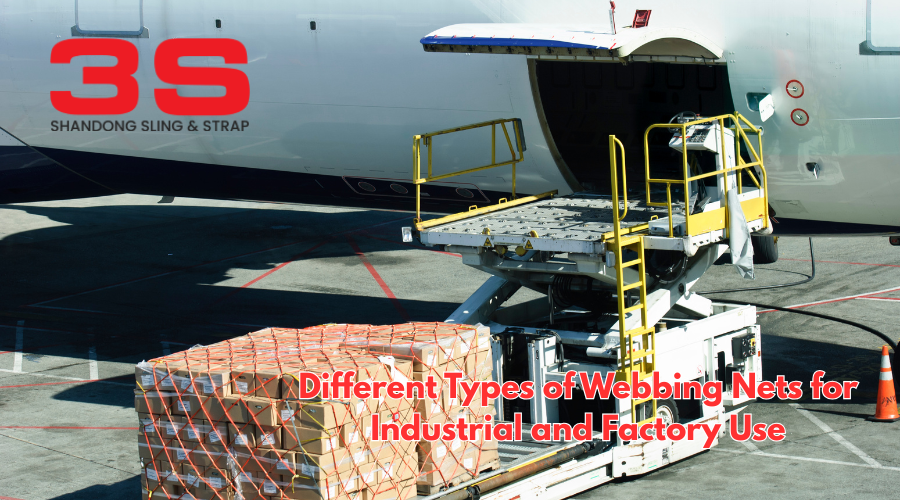
Use cargo-specific webbing to safely transport goods in your facility or during shipment.
Pallet rack safety nets prevent items from sliding off at the rear of storage racks. They also provide a barrier for workers behind storage units, minimizing product loss risk. The nets feature a medium-density mesh for easy monitoring of stored items, ensuring security.
Truck and Container Nets are essential in transport operations. Robust webbing systems guarantee that items are securely secured in trucks, containers, and flatbed trailers. Users can choose among sizes and strengths that correspond to the loads they frequently carry. Many hooks, belts, and ratchets enable easy linking and securing. There are also netting alternatives that will fit specific vehicle or container configurations.
Bin and Hopper Nets guard storage containers by retaining materials and allowing air circulation. Outdoor installations help conserve space and protect stored materials from contamination hazards. Variations in mesh types serve different purposes, from smaller mesh for precise items to larger designs for bulkier, less fragile products.
In addition to safety and cargo netting, numerous industrial webbing nets are customized for respective tasks.
Conveyor nets with conveyor belts trap items that could fall out during transportation. They are installed under or around conveyor belts without impeding their performance. Conveyor nets prevent products from being damaged or lost during delivery and help maintain safety by keeping walkways neat.
The Warehouse Divider Nets divide large areas into different working areas. Their design allows air to pass through and, in addition, gives away space while dividing it into identifiable sections. They are handy for warehouses with varying temperature requirements or where tasks must be separated for safety or a specific purpose. These nets are flexible; they can be moved or customized to fulfill the changing needs of a warehouse.
Industrial Lifting Nets allow for the protected and effective transport of heavy or irregular goods. The design of these industrial webbing nets provides an even load distribution. They involve several lifting possibilities for cranes or loading devices. Key areas of the netting material are reinforced to accommodate heavy loads.
Industrial webbing nets function best when the selection of materials and construction processes is well planned.
🔹 Polypropylene is commonly used to make industrial nets. It provides lightweight strength and tolerates wetting, chemicals, and UV radiation. Because it is cheap, Polypropylene is well-appreciated in any setting. Most industries use polypropylene nets suitable for indoor and outdoor use.
🔹 Nylon offers outstanding strength for its weight and excellent shock dissipation. Since nylon nets can stretch to a certain degree under impact, they make a fantastic alternative for catching objects or people in a fall. Nevertheless, nylon nets have a price premium over Polypropylene.
🔹 Specific applications will likely require extreme strength, and H-T-F is usually used for things like Kevlar or Dyneema. Such materials provide strength far greater than steel, pound for pound. However, the added costs of these fibers are essential for applications requiring superior durability and resilience.
🔹 The border reinforcement of a net is an important aspect to consider. Imported industrial-quality nets feature fully reinforced edges, topped with additional webbing or rope to distribute forces uniformly throughout the net. This measure protects from breakage and increases the net's efficiency, allowing it to run longer.
🔹 Connection points are critical to determine. Industrial nets have been designed to fit together in many ways (D-rings, Carabiners, Hooks, or sewn loops). The strength of the points of connection is often no less than the strength of the webbing material itself.
The appropriate choice of an industrial net to meet your needs depends on assessing the following factors:
🔹 Load rating: The maximum load that the net can bear is usually the primary concern. Each net has a set load rating, and exceeding it endangers people. Choose a net with a higher load capacity than might be necessary. As a reminder, moving or free-falling objects have greater force than objects at rest.
🔹 Environmental conditions: The net type depends on usage conditions. For outdoor use, UV resistance and waterproofing are essential. Nets in chemical environments must withstand specific chemicals. Effectiveness may vary with temperature fluctuations, so select the net that fits your facility.
🔹 Mesh size: Choosing the right mesh size is crucial. Finer meshes block smaller objects but reduce airflow. Larger meshes allow better airflow and visibility but permit smaller objects. Your choice depends on what you need to capture or restrict.
🔹 Installation requirements: Installation requirements vary greatly between network systems. Some nets require professional installation with specialized hardware, while others are designed for straightforward, efficient installation. Consider more than what you need now and discuss whether you'll need to move or modify the nets in the future.
🔹 Compliance with safety standards: Every industrial application must ensure Compliance with safety standards. Safety net specifications may differ considerably and are regulated by country/law/industry.
While webbing nets are not the main charm for industrial activities, they are indispensable for safety and operational efficiency. Knowing which nets meet your needs in terms of type, features, and safety standards is crucial to creating a safer workplace and optimizing material-handling processes.